
All courses -50%. Only until the end of September!
Assertiveness means expressing your needs, feelings and opinions clearly while respecting the boundaries of others—without giving in, and without becoming aggressive. It’s the middle ground where you defend your rights (e.g. the right to make decisions, to say no, to be treated with respect), but without overstepping the rights of your students or their parents.
In practice, assertiveness is a mix of clarity (I say what I need) and kindness (I say it with respect).
It helps you balance different roles. Students, parents, colleagues, school leaders—all with expectations, sometimes conflicting. Assertiveness brings order to communication and helps you stay steady under pressure.
It prevents quiet frustration. Saying yes “just to keep the peace” often leads to built-up emotions and eventual burnout. Assertiveness lets you calmly stand your ground or change your mind—if new arguments make sense (changing your view consciously is still assertive!).
It builds credibility. When your words match your actions, and your rules are clear and consistent, you gain trust. This includes things like setting fixed consultation hours—and sticking to them.
Set clear consultation hours and stick to them (e.g. Wednesdays 3:00–4:30 PM).
Don’t be available around the clock (weekends are your off-time).
Avoid sharing your personal phone number—offer official channels for contact.
Avoid labels like “always” or “never”, threats or sarcasm. Refer to specific behaviours, explain how they affect you, and state what you expect moving forward. This keeps the conversation calm and constructive.
Instead of “You’re doing it again…”, try:
“When [specific behaviour], I feel [emotion], I need [need], and I ask that you [concrete request].”
Then paraphrase and ask clarifying questions to make sure you’ve understood. The empathetic “giraffe language” (vs. the critical “jackal language”) helps reduce tension and opens the door to cooperation.
Students may feel angry or ashamed when they’re corrected. As the adult, it’s your job to keep the conversation safe: calm tone, private setting if possible, no sarcasm or mockery. Be firm but never humiliating.
Clear rules + follow-through = predictability and peace in relationships. This is the basis of successful cooperation with both students and parents.
How to decline assertively:
Start with a clear “no”.
Give a short reason (no over-explaining).
Offer a realistic alternative or timeline—if appropriate.
Examples:
To a student:
“I can’t allow a retake during breaktime. Let’s schedule it for Wednesday at 3:10.”
To a parent:
“I don’t discuss progress over the phone. I invite you to a consultation on Wednesday between 3:00 and 4:30.”
Criticism in school is only meaningful if it supports the student’s growth—not if it damages their self-esteem. That’s why it’s important to address issues calmly and constructively, while showing you still believe in the student’s potential.
Steps:
Setting and tone: Private conversation, calm voice.
Be specific: Focus on clear facts or actions, no generalisations.
One-time message: Avoid repeating the same point over and over.
Expectations: “Next time… I’d like you to…”
Validate emotions: “I understand it’s hard to hear this.”
Criticism is part of every teacher’s career, regardless of experience. The key is not to see it as a personal attack, but as a chance to grow and improve communication.
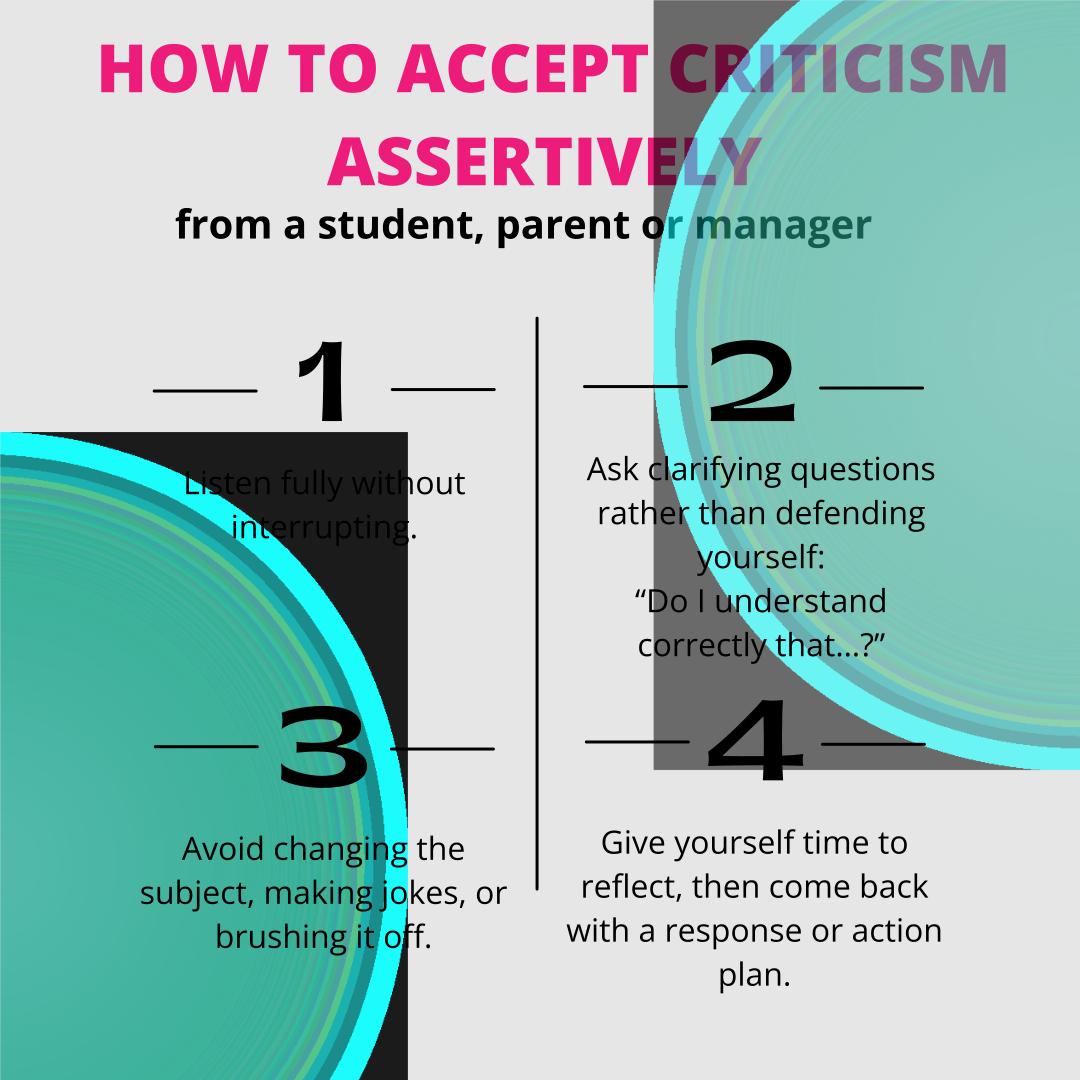
Listen fully without interrupting.
Ask clarifying questions rather than defending yourself:
“Do I understand correctly that…?”
Avoid changing the subject, making jokes, or brushing it off.
Give yourself time to reflect, then come back with a response or action plan.
Consistency between what you say and what you do—and how reliably you follow your rules—builds your image as a competent, assertive professional. In practice, clear expectations, predictability and transparent reasoning make students more cooperative and parents more accepting of your decisions.

