
All courses -50%. Only until the end of September!
Motivating students is one of the key challenges every teacher faces. In this article, you’ll find practical strategies rooted in real-life classroom experience, psychological research, and our growing understanding of how the brain works.
Motivation is a state of readiness to act – the result of both conscious and unconscious factors that drive us towards a goal. Psychology distinguishes two main types of motivation:
Intrinsic motivation – driven by curiosity, passion, a sense of meaning, the desire to grow, or the need to belong
Extrinsic motivation – based on external consequences: rewards, grades, praise – but also punishment and pressure
Research shows that in the long run, intrinsic motivation leads to greater cognitive flexibility, creativity, enjoyment of learning, and overall wellbeing. Extrinsic motivation can be useful in the short term, but when overused, it weakens curiosity and increases frustration.
Lack of motivation rarely appears without reason. Possible causes include unclear goals, low self-esteem, difficulty concentrating, peer conflict, emotional distress, or family-related challenges. The teacher’s role is to identify these barriers and help remove them step by step.
“To light others, you have to burn yourself,” said Jacek Walkiewicz. Students sense the teacher’s energy and enthusiasm. That’s why it’s so important to care for your own balance – setting boundaries between work and personal life, pursuing your passions, and seeking inspiration beyond school. A motivated teacher becomes a natural role model.
One of the simplest yet most effective ways to boost motivation is by asking questions. Good questions open space for thinking, exploration, and independent conclusions.
Examples of motivating questions:
What do I want to learn today?
What could I do differently?
What have I learned from this mistake?
These kinds of questions shift the student’s focus to the learning process, rather than just the result.
When students become teachers to their peers, their motivation increases. Peer learning encourages students to share knowledge, collaborate, and make decisions together. The teacher becomes more of a facilitator than a leader. The result? Active engagement, stronger social skills, and a sense of responsibility.
Play is a natural learning environment. Educational games – quizzes, escape rooms, simulations – make it easier to absorb knowledge in a fun way.
Gamification introduces friendly competition and rewards, which don’t need to be material – points, badges, or shout-outs work just as well. Students gain satisfaction from the process, not just from grades.
Today’s students struggle to concentrate. Focus-building exercises (e.g. simple mindfulness techniques, gradually lengthened tasks) help extend attention spans, improve self-discipline, and reduce fatigue.
Giving students the chance to express opinions openly is a powerful motivator. Debates teach them to construct arguments, listen to other perspectives, and engage in respectful discussion. The teacher facilitates without imposing views. For students, this is a lesson in democracy and responsibility for their words.
Not all students learn the same way. Allowing them to choose how they take notes – whether through traditional outlines, mind maps, or drawings – boosts their sense of autonomy. And autonomy is a key driver of intrinsic motivation.
Students are more engaged when lessons give them room for creativity. Try asking them to: find three alternative solutions to a problem, write their own question on the topic, or come up with a personal example. Creativity fuels curiosity – and curiosity is the foundation of motivation.
It may sound old-fashioned in the digital age, but research shows that handwriting activates multiple areas of the brain, supports memory and focus, and builds self-discipline. A reflection journal, handwritten notes, or short motivational letters help students retain information and boost self-confidence.
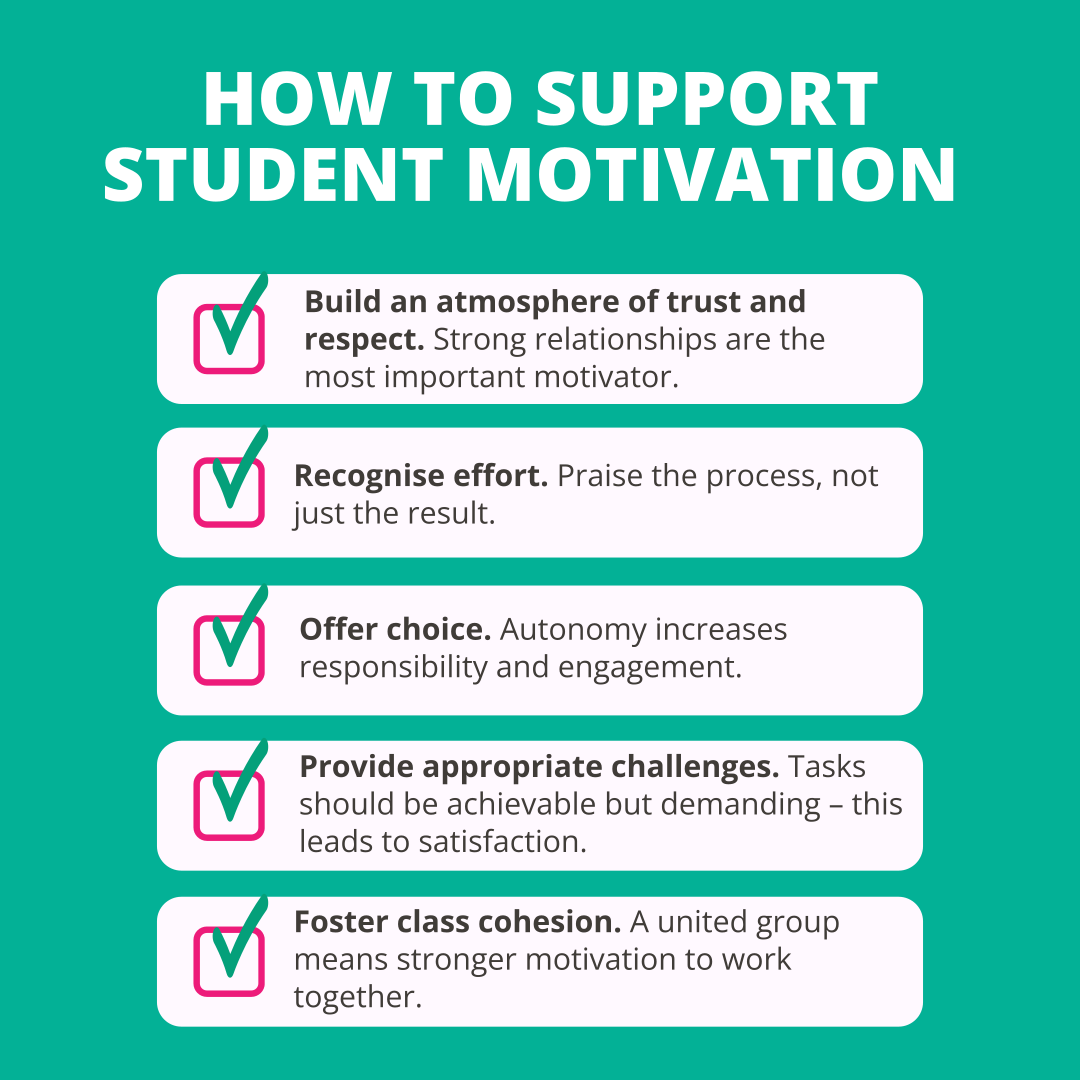
Build an atmosphere of trust and respect. Strong relationships are the most important motivator.
Recognise effort. Praise the process, not just the result.
Offer choice. Autonomy increases responsibility and engagement.
Provide appropriate challenges. Tasks should be achievable but demanding – this leads to satisfaction.
Foster class cohesion. A united group means stronger motivation to work together.
Motivating students is a dynamic process that blends psychology, neuroscience, and everyday classroom practice. There’s no one-size-fits-all solution – success comes from combining different strategies: asking thought-provoking questions, encouraging teamwork, using educational games, and nurturing relationships.
And above all, remember: student motivation begins with the teacher’s motivation.

