
All courses -50%. Only until the end of September!
Sensory Integration (SI) is a neurological process that enables the brain to correctly receive organise and interpret stimuli from the body and from the environment. Thanks to this, a child can respond appropriately—whether writing, playing or sitting still in class.
SI disorders may manifest themselves through a person’s hypersensitivity or hyposensitivity to touch, movement or sounds, as well as through difficulties with motor coordination or concentration.
Teachers don’t need to be therapists, but they need to be able to recognise typical symptoms. That can make daily work easier. They should be on the lookout for students who:
Are easily distracted and can’t focus on tasks,
Avoid physical contact or, conversely, crave deep pressure (e.g., tight hugs),
Are clumsy, trip themselves up frequently or struggle with coordination,
React aggressively to noise, touch or unexpected events,
Have trouble maintaining proper posture while sitting.

Your role is vital—even small changes can make a big difference. Here are some practical tips:
Create predictable routines
Children with SI difficulties need a sense of security. A clear daily schedule, designated classroom spaces and repeatable activity structures help them feel more grounded.
Incorporate movement breaks into your lessons
A short stretch, a few jumps or changing position during work can help regulate tension and boost concentration.
Provide a sensory-friendly environment
Manage lighting and noise levels. Some children benefit from noise-cancelling headphones or sitting on sensory cushions.
Collaborate with SI therapists and parents
If you notice worrying signs, talk with the child’s parents and recommend a consultation. Jointly developing strategies and exercises can lead to visible improvements.
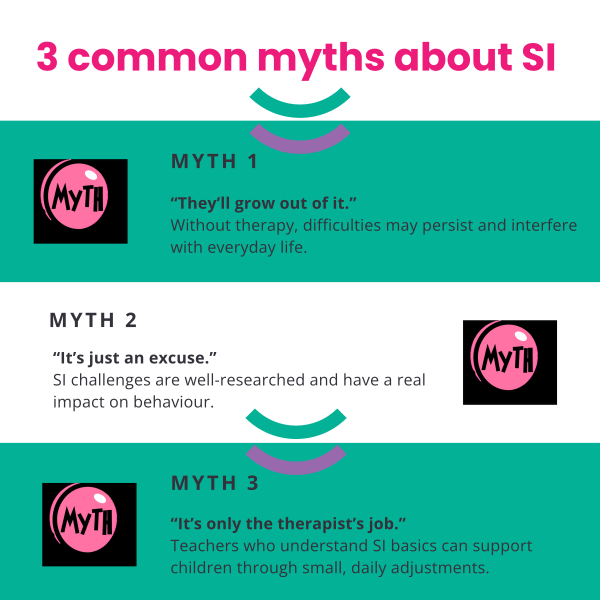
Myth 1: “They’ll grow out of it.” Without therapy, difficulties may persist and interfere with everyday life.
Myth 2: “It’s just an excuse.” SI challenges are well-researched and have a real impact on behaviour.
Myth 3: “It’s only the therapist’s job.” Teachers who understand SI basics can support children through small, daily adjustments.
Awareness helps teachers better understand students who are often misjudged as “troublemakers”. The right support improves these students’ school experience—and gives them a real chance to grow and thrive.

