
All courses -50%. Only until the end of September!
1. ESDM (Early Start Denver Model)
A method of early intervention for children aged 1–5, combining Applied Behaviour Analysis (ABA) with play-based learning. The goal is to foster language and cognitive development in natural environments, leading to stronger social skills.
2. 3i Method (Intensive–Individual–Interactive)
Conducted at home by a parent or therapist for several hours a day. It focuses on individualised play-based interaction to build emotional connections and reduce challenging behaviours.
3. Son-Rise Programme (Option Method)
Emphasises unconditional acceptance and natural learning through the “3 E’s”: Energy, Excitement, and Enthusiasm. Calm, stimulus-free settings foster communication and relationship-building.
4. Holding Therapy
Based on physical closeness and embracing, this approach aims to break emotional and communicative barriers. It must be applied with great sensitivity to the child’s needs.
5. TEACCH
Focused on structure and predictability: clearly organised environments, visual schedules and explicit instructions help autistic students function independently.
6. Non-directive Therapies
Sherborne Developmental Movement – enhances body awareness and interpersonal connection.
Animal-assisted therapy, art therapy – engage emotions, boost communication, and support self-expression.
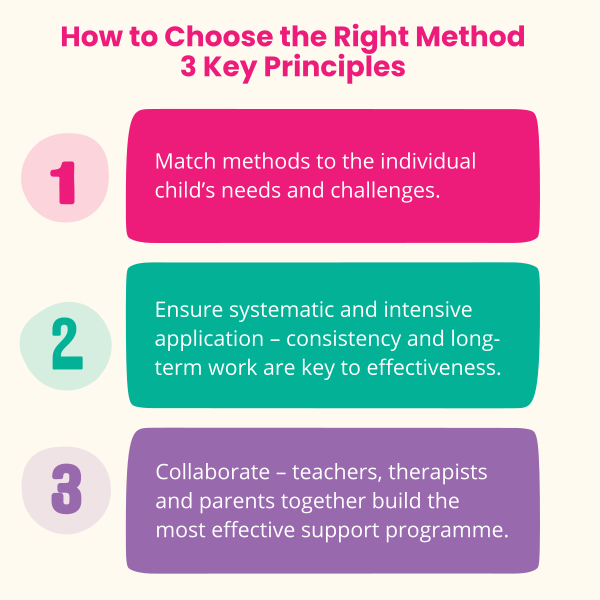
Match methods to the individual child’s needs and challenges.
Ensure systematic and intensive application – consistency and long-term work are key to effectiveness.
Collaborate – teachers, therapists, and parents together build the most effective support programme.
Understanding these methods helps you tailor your approach to students with autism and support them more effectively. With structure, emotional support and proactive strategies, you can create an inclusive classroom where every child has the opportunity to grow and succeed.

