
All courses -50%. Only until the end of September!
How should we respond to avoid escalating the issue? How can we support the children while maintaining authority and trust?
Many adults view anger as something negative. In fact, it’s a natural and necessary emotion. In young children, it often signals unmet needs, a violation of boundaries, or frustration due to an obstacle.
Anger can motivate children to act, to defend their rights, or to find new solutions.
The adult’s role isn’t to eliminate anger, but to teach the child how to recognise, name, and express it in a safe way. This is a key life skill that lays the foundation for emotional regulation in adulthood.
Aggression is often a reaction to helplessness. Preschoolers don’t yet have fully developed verbal skills to express what they feel. So frustration, stress, or a sense of unfairness may show up as shouting, hitting, pushing, or throwing things.
Possible causes include:
Frustration (wanting something and not knowing how to get it)
Seeking attention
Stress or feeling unsafe
Copying the behaviour of adults or peers
That’s why it’s so important to respond calmly and consistently, while helping children find alternative ways to manage their emotions.
Anger is an emotion. Aggression is an action. A child has the right to feel angry—but not to hit, insult, or hurt others.
As a teacher, your job is to set clear and consistent boundaries:
“I can see you’re angry, and that’s okay. But I can’t let you hit. You can tell me what happened or shout into a pillow.”
This kind of response helps stop the behaviour, but also shows the child that emotions are accepted—it’s the way they are expressed that must be respectful and safe.
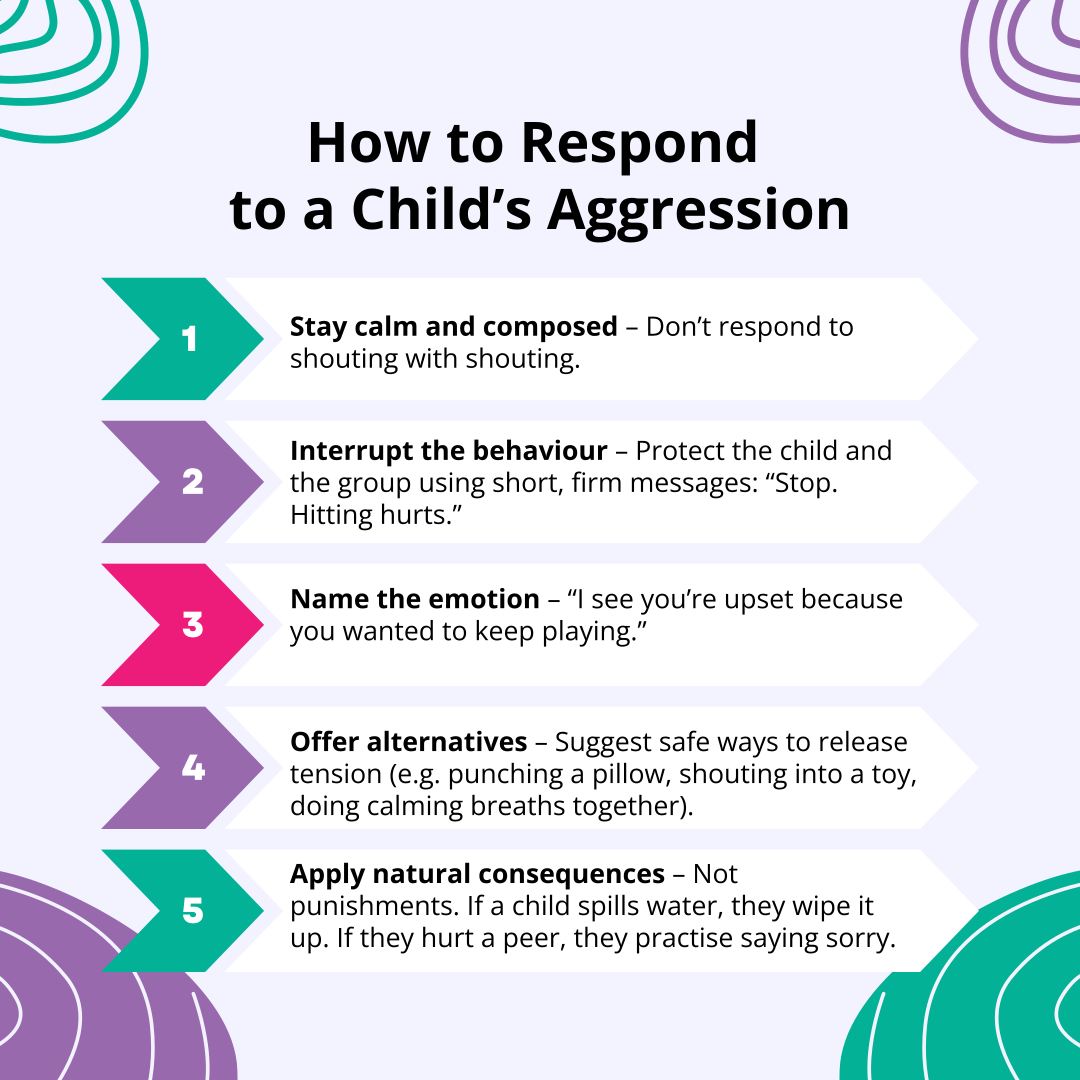
Stay calm and composed – Don’t respond to shouting with shouting.
Interrupt the behaviour – Protect the child and the group using short, firm messages: “Stop. Hitting hurts.”
Name the emotion – “I see you’re upset because you wanted to keep playing.”
Offer alternatives – Suggest safe ways to release tension (e.g. punching a pillow, shouting into a toy, doing calming breaths together).
Apply natural consequences – Not punishments. If a child spills water, they wipe it up. If they hurt a peer, they practise saying sorry.
Inappropriate language is one of the most common behavioural issues in early years. Often, children repeat rude words for fun or to test adults’ reactions. Sometimes it’s an outlet for frustration.
How to handle it:
Don’t panic or overreact – The first time it happens, you can ignore it.
Talk it through – Explain that some words can hurt others and make people not want to play.
Set clear rules – If a child keeps using bad language, introduce a simple consequence (e.g. a short break from talking).
Reward positive behaviour – Praise children for expressing emotions politely and teach them alternatives.
Strong parent-teacher cooperation is essential for effective behaviour management. But sometimes, instead of support, teachers face criticism, denial, or indifference.
In these cases, three principles can help:
Focus on the child, not blaming the parents – Stick to facts and behaviours, not labels or judgments.
Build a shared goal – Emphasise that everyone wants what’s best for the child.
Stay calm, empathetic and respectful – A parent may feel lost, overwhelmed, or judged. Listening without blame can open the door to collaboration.
Avoid labelling (“Your child is naughty”) and never try to solve issues in a rush. Create a calm space and always start with something positive—like acknowledging the child’s strengths.
Challenging situations in preschool are inevitable—but you can learn to respond wisely and constructively. A child’s anger is not the enemy—it’s a message that deserves attention. Aggression should be firmly stopped, and swearing can be used as a chance to teach new communication rules.
The key lies in consistency, empathy, and open dialogue—with both children and their parents. These are the building blocks of a safe and supportive learning environment, where children learn to manage emotions and build healthy relationships—and teachers feel supported and empowered.

